Sunday, August 29, 2010

An altar

I'm back from a brief vacation with friends on coastal North Carolina. Tomorrow I'll get started on two brand new commissions.

The first is a small altar for my client and former classmate, Andrea. An altar is not exactly a common piece of furniture. I doubt you'll find anything like it at NFM or Ikea. So it's the type of one-of-a-kind object I love to have a chance to make. I'm also honored to have been asked to make a piece that will fill such a central role in someone's life. I've designed a few chairs for specific individuals. Doing so is like creating a tiny building for that person - something that is sort of an extension of their body. It seems that an altar might play a similar role for a person, though more metaphysically. 


The project will also use all reclaimed wood and natural pigment, water-based milk paint. The color in the picture below is a little off; it'll actually be a little greener and a little brighter, or so that's the plan anyway.

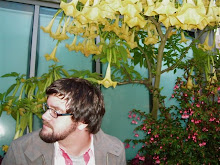
Speaking of color, if you've been at any of the several events at CAMP lately (or just dropped in to hang out or do some work) you might have seen this massive tabletop I made for them. Like Andrea's altar will be, it's also colored with milk paint. The metal base was apparently leftover from the old Mastercraft Furniture company, so it was compelling that we got to repurpose something that had a connection to the old space. And in case you were wondering, that dude in the photo is Stevie "RDQLUS" Gordon, who I'd followed with some interest on Twitter for several months, but had never had a chance to meet until I stopped by to take this picture. Be sure to check out his RDQLUS portfolio of design work at RDQLUS Creative.


Friday, August 13, 2010

Habitat in a Birdhouse

Usually when I finish a project, regardless of what it is, the flaws - real or perceived - are what I most notice. Maybe it's because I've been looking at the same piece for so long; or maybe I'm too hard on myself. But when I delivered a table to my client Jessica at her new Birdhouse Collectible space in the Mastercraft building (1111 N. 13th St.), I had a different feeling: I felt confident and inspired.


Jessica's table started with a few ideas. She wanted a piece that had a modern, feminine quality. She also talked about how much she liked zebrawood, which besides being prohibitively expensive, is also kind of on my environmentally unfriendly list. I'm not sure, but I'm guessing it's grown in a rain forest or similarly deforested, tropical area. Ultimately, I came up with a curvy cornered, spalted hackberry top with planks joined at irregular angles. The walnut legs curved at each outside corner and slightly tapered and angled out as they approached the floor. As you can see when comparing the original drawing to the the finished photos, I stayed pretty true to the design... with one major exception. What's that red stuff, you ask? No, I didn't hit an artery on the table saw; and the table was not a prop in "Resovoir Dogs". The red splatters and rivulets red marks are resin cast into the surface of the wood. They were also a solution to an unexpected problem with the material.


I bought the hackberry for Jessica's table at a sawmill in Silver City, IA. Most of it was rough cut, meaning the boards hadn't yet been run through a thickness planer to make their surfaces smooth and uniform. To my chagrin, there were wormholes winding across and straight through every board, the remnants of a society of bugs that apparently had once inhabited a stack of boards. I had run across this problem in the past, and had thought of using resin to fill the flawed faces of the boards. This time, it created an opportunity to pull the design together and make the piece more strongly connected to Jessica's business and space. I don't use esoteric titles very often, but in this case, I called the table "Habitat". I'm making more objects - furniture pieces and sculptural forms - that use resin casting while simultaneously casting a spotlight on the complex life of raw materials.

Did I mention that Birdhouse Collectible is a sort of showroom and gallery? It just so happens that I have a few other pieces for sale in the space. If you're interested in seeing those pieces, checking out the Habitat table and more, the Birdhouse Collectible Open House is a perfect opportunity. Come by next Saturday, August 21 from 6 - . I hope to see you there.


Friday, July 16, 2010

Summer CAMP

The other day I got a phone call from Eric Downs of Downs Design, asking if I could make a simple, affordable conference table top for the new CAMP grounds in the Mastercraft building. Eric, and Megan of Princess Lasertron fame just started CAMP. They have some seriously talented neighbors, including Birdhouse Interior Design, Secret Penguin, What Cheer and minor white studio. I'm privileged to contribute a little something to another of these energized spaces. Here's a simple version of what I came up with:

Eric procured a metal frame, so I decided to add a series of boards milled at different widths and joined together as a surface would add some texture and depth to the piece. I'll use milk paint - a forgotten product made widely available commercially again fairly recently - to add a modern color palette. Milk paint is an environmentally safe paint made from natural, dry pigments. You just add some water and brush on a soft, rich surface.

The whole table will be finished and sealed to combat the inevitable coffee cup rings that will accompany the hoards of Macbook users who gather around to create the next generation of websites, apps and programs.

Saturday, July 10, 2010

The skinny on milling around


I spent most of Thursday near the small town of Carson, Iowa, at my woodworking pal Skip's house. I met Skip soon after Niz and I got married at Skip's cousin, Eddith's house. He found out I do some woodworking and invited me to help the next time he milled some logs. The 'next time' was Thursday, and it was the most entertaining and educational experience I've had since I visited Thailand earlier this year.
I've visited a couple local sawmills but have never seen the portable milling process that Skip's sawyer buddy, Andy, orchestrated Thursday.

We started by loading single logs onto a stationary frame. Andy operated a series of hydraulics to turn and stabilize each log against the frame. Next, he positioned the portable mill's blade - which is essentially a sideways bandsaw - for the correct depth, and cut the log into a square pillar, rotating the log 1/4 turn after each cut in order to remove most of the bark. When the log was squared, Andy cut 5/4" thick (that's 1 & 1/4" thick) strips from the log, rotating it occasionally in order to make the ideal piece of lumber each time. As the blade finished each cut, we pulled the freed slabs of lumber away and placed them on a series of drying racks. Surprisingly, the freshly cut wet, or "green" lumber was about the same color as the dry wood will be.

The day was not without a couple hiccups. One of the logs Skip was most excited about milling was a long, straight trunk of ash. Skip was having the log quartersawn (if interested in a quick, reliable tutorial about the differences in how wood is milled, go here). Sometimes, particularly with oak logs, this milling process results in revealing a unique and desirable surface grain highlighted by a sort of pattern of reflective... flecks. Boards cut this way also tend to be more stable, in terms of their reaction to humidity.

Unfortunately, as the ash log was being cut in half, the blade ran into a nail. And a piece of wire. Likely, they were part of a farmer's fence decades ago, and had grown into the tree over time.  Even a small piece of metal like a nail can take a major toll on a saw blade. Usually, nails and other pieces of metal (bullets and similar shrapnel are also common) are found by running a hand-held metal detector across the surface of each log. However, these surprise pieces were buried deep inside the tree. The dark spot near the middle of each half of the log shown at right is a stain in the vicinity occupied by the nail. These annoyances were balanced by the fact that the weather couldn't have been milder for July and I didn't lose any fingers.

By the end of the day we'd milled several logs of cherry, walnut, ash, burr oak (our region's version of white oak) and hickory, all harvested from Skip's land. The lumber will rest on Skip's drying rack for about a year, at which time I'll head back over to Carson and collect my wood-wages for the day. More importantly, I have a better understanding of a fundamental step in bringing a tree into fruition as a new object.